
'Reduce your equity allocation, put that allocation into gold and fixed income.'

PV registrations in this year's festive period stood at 287,717 units as against 333,456 units in the corresponding period last year, down 14 per cent. Two-wheeler registrations also fell by 13 per cent to 15,83,276 units as against 18,11,703 units in the year-ago period.

Why is Shailesh Chandra, managing director of Tata Motors Passenger Vehicles and Tata Passenger Electric Mobility, not worried about the competition?
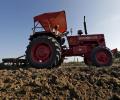
After a stellar run on the bourses that saw tractor stocks rise up to 52 per cent, analysts are turning cautious on the sector as muted demand trends may weigh in the near-term. Total volumes in the tractor segment for the last three quarters of the current financial year (9MFY24) have remained weak with VST Tillers, Escorts Kubota, and M&M seeing declines of 21 per cent, 5 per cent, and 3 per cent year-on-year (Y-o-Y), respectively, during the period, amid patchy rainfall, delayed crop harvest, and lower reservoir level. Across industry, total domestic sales volume so far in the current financial year (April '23 to January '24) has declined 5 per cent Y-o-Y, as per Tractor Manufacturers Association (TMA).

'From data on enquiries, we can build what we call a data lake or a data warehouse where data is classified into various cohorts and then we use AI and ML tools to predict demand down the line.'

The global semiconductor shortage hit passenger vehicle sales in September, with major manufacturers like Maruti Suzuki, Hyundai and Mahindra & Mahindra reporting a decline in sales on Friday. Kia India and Honda Cars also reported a dip in wholesales last month as compared with the year-ago period. Carmakers like Tata Motors, Toyota Kirloskar Motor, Nissan and Skoda, however, reported an increase in passenger vehicle dispatches last month despite supply chain issues.

The government has slashed by up to a fifth the supplies of cheaper gas to city gas entities that retail CNG to automobiles, increasing their dependence in costly imported fuel. Buying costly imported gas to make up for the shortfall should result in a hike in CNG price but given the ensuing assembly elections in Maharashtra, that may be put off for now. Indraprastha Gas Ltd and Mahanagar Gas Ltd in regulatory filings stated that supplies of domestically produced gas, which was available at a capped rate which is half of the imported price, has been cut.

Retail sales of passenger vehicles - the largest component of the pie - jumped 11 per cent year-on-year in October to 248,036 units, largely because of discounts offered during Navratri and Diwali.

Large number of buyers has put purchases on hold because of a combination of factors, including high fuel prices, higher insurance cost, and firm interest rates.

Passenger vehicle wholesales in India increased by 12.73 per cent to 285,367 units in November as against 253,139 units in the same month last year riding on the back of festive demand, auto industry body SIAM said on Friday. According to the latest data by the Society of Indian Automobile Manufacturers (SIAM), two-wheeler sales rose 13.43 per cent to 16,00,379 units, compared with 14,10,939 units in the same month last year.

After the easing of lockdown in mid-May, auto companies were able to resume production in a phased manner, but the ramp-up was slow due to a broken supply chain, and lockdown-induced restrictions.

The overall volume at India's top four M&HCV makers - Tata Motors, Ashok Leyland, Volvo Eicher, and Mahindra & Mahindra - fell 59.5 per cent to 31,067 units during the month.

Tata Motors on Wednesday said it remains confident about the long-term prospects of the electric vehicle segment and termed the fall in sales numbers a "short-term" issue. In an interaction with PTI at the launch of the company's first mid-sized electric SUV, Curvv.ev, at a starting price of Rs 17.49 lakh (with 45 kWh battery) Shailesh Chandra, managing director of Tata Motors Passenger Vehicle and Tata Passenger Electric, said that the company is looking to achieve one-lakh electric vehicle sales this financial year. Curvv EV is the second car based on the advanced Pure EV architecture - acti.ev, which marks Tata Motors' entry into the highly competitive mid-size SUV segment and will be competing with the likes of MG ZS EV, Hyundai Creta and Maruti Suzuki Grand Vitara, among others.
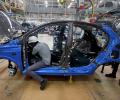
While sales of compact cars, including models such as Swift, Celerio, Ignis, Baleno and Dzire declined, sales of utility vehicles, including Vitara Brezza, S-Cross and Ertiga, increased 26.3 per cent to 19,177 units as compared to 15,178 in the year-ago month.

Automotive (auto) and auto ancillary stocks have been in the fast lane thus far in 2023-24 (FY24), with the National Stock Exchange Nifty Auto Index surging nearly 27 per cent, outperforming the Nifty50, which has gained roughly 11 per cent during this period. The top-gear performance of auto stocks at the bourses, according to A K Prabhakar, head of research at IDBI Capital, has been triggered by the premiumisation of products across vehicle manufacturers, which has seen vehicle sales remaining relatively stable. "It is not about higher sales figures now, but about premiumisation.

While customers in metro cities are still buying cars, quick growth is likely only from upcountry markets, where highways and roads are being built, and discretionary income and aspirations are rising.

Auto Expo 2023 may not trigger a fresh rally in automobile stocks, say analysts, as this year's edition lacks participation from major listed players. It is also owing to the focus on electric vehicles (EVs), a segment where four-wheelers have minuscule market share. "In the passenger vehicles (PV) segment, Maruti Suzuki India and Tata Motors are the only listed players.

With Onam and Raksha Bandhan just around the corner, the festival season is ready to kick off in full swing. As people embrace the celebratory spirit, companies anticipate a surge in sales this year. Consumer durables firms are expecting strong growth of 40-50 per cent in the premium segment during the upcoming season. Appliance makers also foresee increased demand for cooling appliances - refrigerators and air conditioners - which were impacted by unseasonal rainfall.

Automobile dealers' body FADA on Tuesday expressed concern that the chip shortage issue could derail passenger vehicle (PV) retail sales during the festive season, as automakers are struggling with an adequate supply of vehicles to dealers due to production challenges. Terming semiconductor shortage as a "full-blown crisis", the industry body warned of a lacklustre festive season, especially for the passenger vehicle dealer fraternity, with low inventory levels and non-availability of the fast-moving model variants ahead of the peak festive period.

'Nearly all companies are extending festival offers for entry-level, sedan, and hatchback segments.'

However, compared to August, vehicle sales increased by 15.25 per cent on the back of discounts. Maruti led the market in offering heavy discounts and incentives for buyers and dealers, reports Arindam Majumder.

Dealers say the significant increase in sales was driven by a need to plug the diminishing inventory as most dealerships were transitioning from BS-IV to BS-VI when the Covid-19 lockdown was announced.

'We are seeing one of the highest discounts in recent years across companies.' 'October is a crucial month with several festivals coming up.'

While two-wheeler sales are down 15 per cent year-on-year, passenger vehicles sales are lower by 5-7 per cent.

The new scheme, promoting manufacturing of electric vehicles (EVs) by global majors, will give a fillip to companies like Tesla and its upstart rival Vinfast, both of whom have lobbied for lower import duties from the Centre. While Vinfast has already announced an investment of Rs 4,000 crore to set up an electric vehicle (EV) plant in Tamil Nadu, Tesla's next move will be watched carefully. Four years ago, Musk announced that his company would come to India.
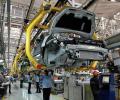
The K-shaped economic recovery in India from the pandemic slowdown shows in corporate results as well. The automobile sector, which represents big-ticket consumption, continues to do well and has increased its share in corporate revenues and profits while fast-moving consumer goods (FMCG) companies that sell low-ticket consumer goods are struggling with poor sales and earnings growth. The share of the automobile sector, including makers of auto ancillaries, in corporate net sales rose to a 10-quarter high of 10.05 per cent during July-September 2023 (Q2FY24) from 8.94 per cent a year earlier and 9.75 per cent in Q1FY24.

Passenger vehicle sales in India could hit a record of over 38 lakh units in FY23 but the strong growth momentum is not expected to carry over to 2023-24 with pent-up demand already been released, according to Tata Motors Passenger Vehicles managing director Shailesh Chandra.

This year, there is hardly any cheer in the market place, though three festivals - Eid, Dussehra and Diwali - have fallen in the month of October. Several consumer electronics, automobile, personal care products and food item retailers say sales are sharply down. Even new home sales are learnt to be lackluster.

After a very weak December quarter and a poor year-to-date fiscal year volumes-when sales plunged to the lowest in nine years, the signs in the first 15 days of January haven't been encouraging either. "Though the severity of the current wave is not as high as the previous one, it has hit the sentiments hard impacting conversion of enquiries into sales," said Vinkesh Gulati, president, Federation of Automobile Dealers Association (FADA).

The five-year (2015-16 to 2020-21, or FY21) compound annual growth rate (CAGR) of the overall auto industry is now negative at 2 per cent, against 5.7-per cent growth it saw in the previous five years (from 2010-11 to 2015-16).

Major automobile manufacturers like Maruti Suzuki, Hyundai, Mahindra & Mahindra, Tata Motors and Toyota Kirloskar on Tuesday reported decline in domestic passenger vehicle sales in May compared to the previous month as a spike in COVID-19 cases and lockdowns across various states hit production and dispatches. The country's largest carmaker Maruti Suzuki India (MSI), which shut production from May 1 to May 16 so as to divert oxygen from industrial use for medical purposes, reported domestic dispatches to dealers at 35,293 units last month, down 75 per cent from 142,454 units in April. The company said sales of its mini cars, comprising Alto and S-Presso, declined by 81 per cent to 4,760 units in May as against 25,041 units in April this year.

Dealers across brands are slashing prices by Rs 20,000 to over Rs 1 lakh, depending on the car model.

This will ensure its vehicles reach dealers much faster and delivered to buyers in a maximum of three days, reports Shally Seth Mohile.

Except for March, when BMW recorded unusually high sales, Mercedes sales were ahead in the other months.
A global slowdown, which is forcing companies to curtail production, cut salaries and jobs, is helping retailers who have launched private labels.

Prices of two-wheelers, passenger and commercial vehicles are set to rise 15-25%
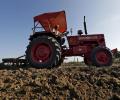
This rise was spurred by record kharif sowing - after a good rabi season - that ensured high disposable incomes in rural India.

Leading microchip providers Qualcomm and Intel say the chip shortage might last anything between four months to a year, perhaps even two years, depending on the various product categories - mobile devices, ICE, electric vehicles, appliances, data centres. Prakash Mallya, MD, Intel India and vice president, sales and marketing and communications group, said the spike in demand was huge, and cut across segments from PCs, phones, appliances and auto leading to the shortage.

Dealer despatches will probably be a good signal of economic turnaround or further deterioration, says Devangshu Datta.

The company had identified some emission-related issue with Tavera and some quality issue with Sail.
 © 2026 Rediff.com - Advertise with us - Disclaimer - Privacy Policy - Sitemap - Feedback - About us - Terms of use - Grievances